
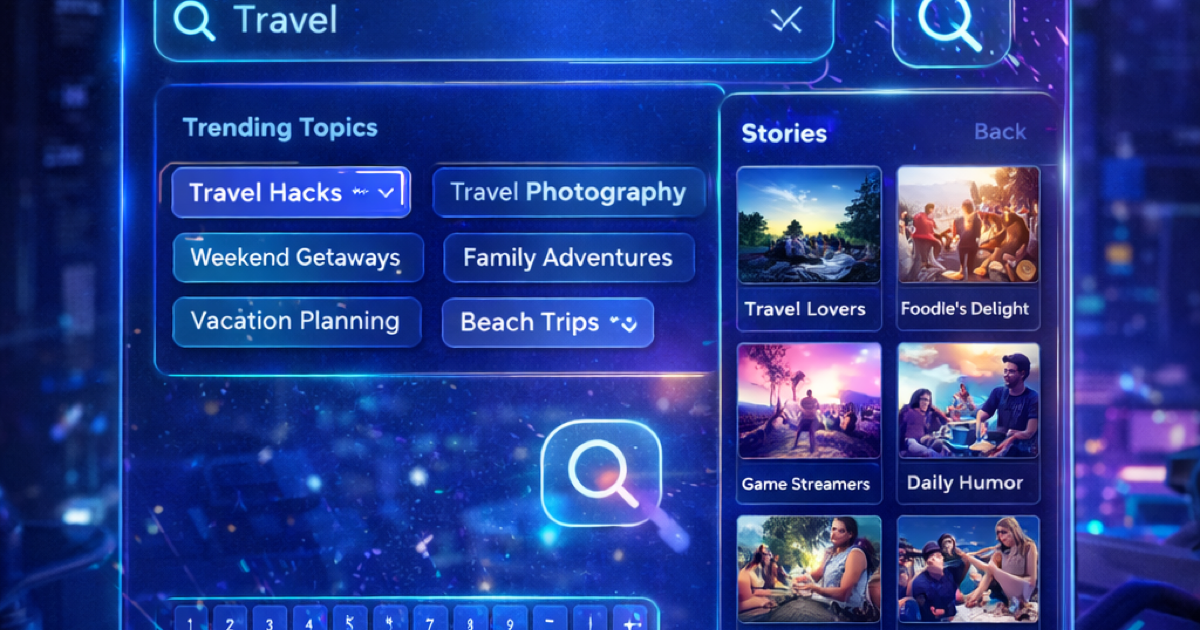
Discovery is strongest when users can move quickly between intent types: finding people, exploring topics, and following ongoing narrative content. WeLoop supports this through integrated search and story workflows that are designed for speed and continuity.
Search in WeLoop supports users, keywords, and hashtags, which gives people multiple discovery vectors based on how they think. Some users search by creator, others by topic. A broad search model helps both behaviors and reduces the dead-end feeling common in underpowered social search systems.
Stories add temporal relevance to discovery. They help users track what is happening right now and allow fast social feedback through views and reactions. In WeLoop, story comments can route into chat, which turns momentary reactions into longer-form conversation without adding extra workflow steps.
Creators benefit from this structure because discovery and relationship-building are connected. A user can find a creator through search, engage via story, then continue conversation in chat or groups. That sequence is more valuable than isolated visibility because it supports audience development, not just impressions.
Search quality also improves platform trust. When users can reliably find people, hashtags, and topic threads, discovery feels intentional rather than random. That predictability is one of the most overlooked drivers of retention in social apps.
For teams and creators, stories create a lightweight publishing cadence that complements full posts and livestreams. This can keep audience touchpoints frequent without requiring high-production content every day, which is useful for long-term consistency.
When search and stories are integrated effectively, users spend less time hunting for relevant content and more time participating in meaningful interaction. WeLoop’s discovery model is built around that practical outcome.
For additional platform analysis, see all WeLoop Articles, including chat and groups and feed contexts.